
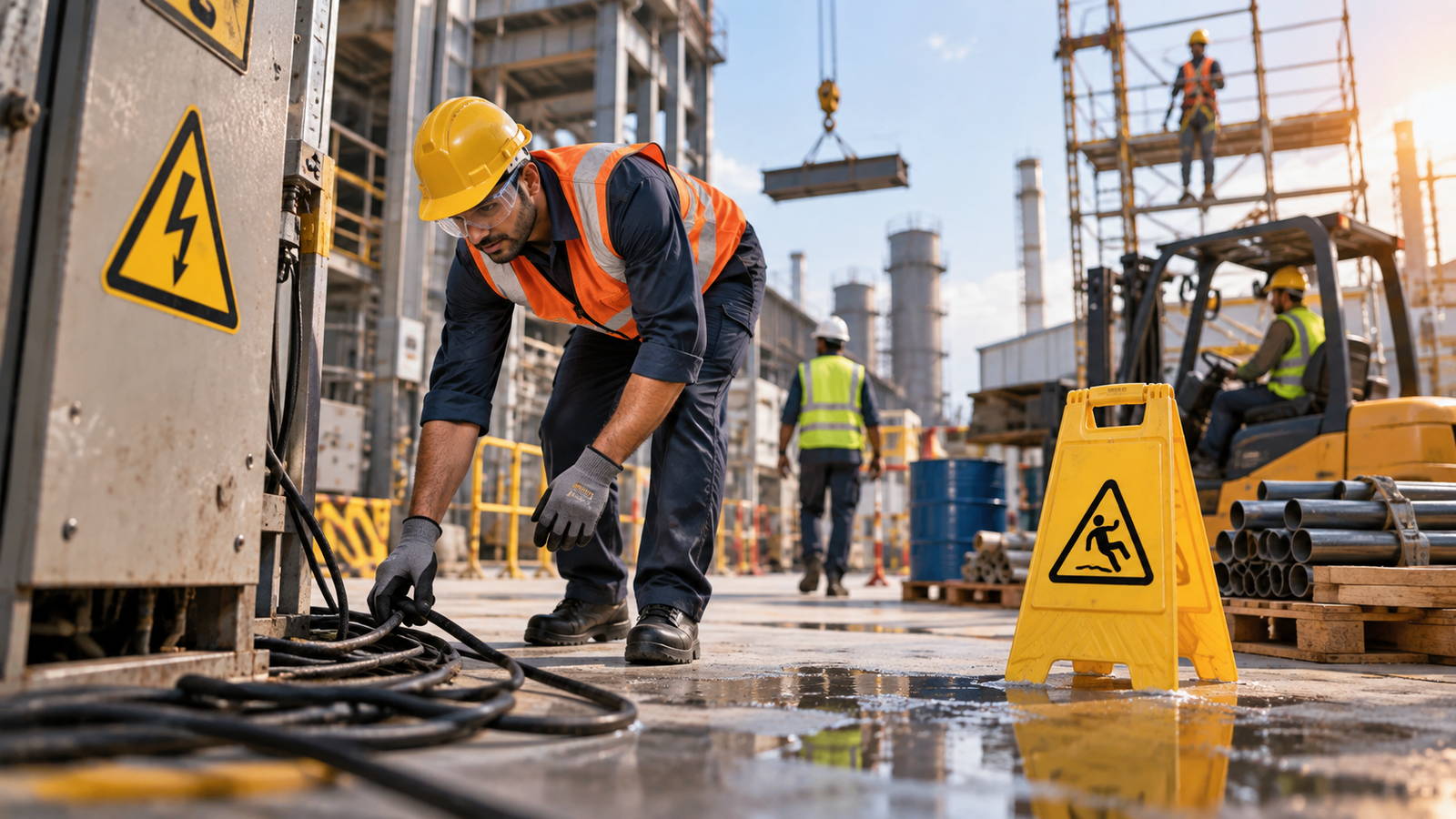
Workplace safety hazards are present across almost every industrial and operational environment. From slips and falls to electrical risks and unsafe machinery, these hazards can cause serious injuries when they are not properly identified and controlled.
A strong workplace safety programme starts with understanding the risks workers face every day. In this guide, we look at five common workplace safety hazards and practical steps organisations can take to reduce them.
What Are Workplace Safety Hazards?
Workplace safety hazards are conditions or activities that can cause injury, illness or damage to workers and workplace property. These hazards can result from the physical environment, equipment, materials, work practices or the way tasks are performed.
Identifying these risks early allows organisations to put appropriate controls in place and reduce the likelihood of accidents. Regular workplace inspections and hazard assessments are therefore an important part of maintaining a safe working environment.
What Are the Most Common Workplace Safety Hazards?
1. Slips, Trips and Falls
First, slips, trips and falls are among the most common workplace accidents. They can occur because of wet or uneven floors, loose cables, poor housekeeping, obstructed walkways, inadequate lighting or unsuitable footwear.
How to prevent them:
Keep walkways clear – Remove unnecessary materials, tools and other obstructions from walkways and work areas.
Clean spills promptly – Address oil, water, chemicals and other spills as soon as they are identified and use appropriate warning signs where necessary.
Manage cables and hoses – Route electrical cables, air hoses and other lines safely to prevent workers from tripping over them.
Maintain floors and lighting – Repair damaged flooring and ensure work areas, stairways and walkways have adequate lighting.
Use appropriate safety footwear – Select safety shoes with suitable slip resistance for the workplace environment.
2. Electrical Hazards
Similarly, electrical hazards can result in electric shock, burns, fires and, in severe cases, fatal injuries. Damaged cables, overloaded circuits, exposed conductors, faulty equipment and improper electrical work can all create significant risks.
How to prevent them:
Inspect electrical equipment regularly – Check cables, plugs, sockets, tools and other equipment for visible damage or deterioration.
Use qualified personnel – Electrical installation, maintenance and repair work should be carried out by competent and appropriately qualified personnel.
Protect against contact – Keep live electrical parts properly enclosed and use suitable barriers and protective systems.
Follow isolation procedures – Appropriate lockout and isolation procedures should be followed before maintenance or repair work.
Use suitable electrical PPE – Where electrical risks remain, workers should use PPE selected specifically for the hazards involved.
3. Machinery and Moving Equipment
In addition, industrial machinery and moving equipment can create serious risks through rotating parts, moving components, crushing points, cutting mechanisms and unexpected machine movement. Forklifts and other mobile equipment can also create collision and struck-by hazards.
How to prevent them:
Install appropriate machine guarding – Guards and protective devices can help prevent workers from coming into contact with dangerous moving parts.
Follow operating procedures – Workers should understand the correct operating procedures for each machine and equipment type.
Provide operator training – Only trained and authorised personnel should operate machinery and mobile equipment.
Maintain equipment – Regular maintenance and inspection can help identify mechanical problems before they create unsafe conditions.
Control access to hazardous areas – Barriers, safety gates and clearly defined exclusion zones can help keep unauthorised personnel away from dangerous equipment.
4. Working at Height
Meanwhile, falls from height can result in severe injuries or fatalities. Risks can arise when workers use ladders, scaffolding, elevated platforms, roofs or other areas where a fall could occur.
How to prevent them:
Assess the task before starting – Identify potential fall hazards and determine appropriate control measures before work begins.
Use suitable access equipment – Workers should select ladders, scaffolding and elevated work platforms that suit the task and keep them in safe condition.
Install fall protection systems – Where required, use suitable guardrails, safety barriers, lifelines and other fall protection systems.
Use appropriate PPE – Workers exposed to fall hazards may require suitable fall protection equipment, including safety harnesses and related equipment.
Train workers – Workers should understand safe working-at-height procedures and know how to inspect and use fall protection equipment correctly.
5. Fire and Chemical Hazards
Fires, chemical spills and exposure to hazardous substances can create serious risks for workers and facilities. Flammable materials, combustible substances, incompatible chemicals and inadequate storage can increase the likelihood of incidents.
How to prevent them:
Store materials correctly – Workers should store chemicals and flammable materials according to their specific handling and storage requirements.
Maintain fire protection systems – Safety teams should regularly inspect and maintain fire extinguishers, alarms, hydrants and other fire protection systems.
Control ignition sources – Keep combustible materials away from heat sources, sparks and other potential ignition sources.
Provide suitable PPE – Workers handling hazardous substances should use PPE appropriate for the specific chemical or exposure risk.
Prepare for emergencies – Employers should clearly establish emergency procedures, evacuation routes and fire response arrangements and communicate them to workers.
Why Regular Safety Assessments Matter
Workplace conditions can change as equipment, processes, materials and work activities change. A workplace that seemed safe yesterday may present new risks after a process change, equipment installation or change in working conditions.
Regular safety inspections and assessments help organisations identify hazards before they result in incidents. They also provide an opportunity to review existing controls, address unsafe conditions and improve workplace safety practices.
A proactive approach helps organisations move beyond simply reacting to accidents and instead focus on preventing them.
Building a Safer Workplace
Preventing workplace accidents requires more than simply providing safety equipment. Organisations need to identify hazards, implement appropriate controls and ensure that workers understand safe working practices.
A strong safety programme combines hazard assessments, engineering controls, administrative measures, worker training, appropriate PPE and regular inspections. When these measures work together, organisations can create safer working environments while reducing unnecessary risks to people and operations.
Final Takeaway
Workplace hazards can vary significantly between industries and work environments, but many risks can be reduced through proper identification, assessment and control.
Overall, slips and falls, electrical hazards, machinery risks, working at height and fire or chemical hazards all require appropriate preventive measures. Regular inspections, worker awareness, suitable safety equipment and effective safety procedures can help organisations build a stronger safety culture.
The goal should always be to identify hazards before they become incidents and continuously improve the way safety is managed.
Looking for Workplace Safety Solutions?
Identifying workplace hazards is the first step towards creating a safer working environment. ViDe Turnkey Solutions provides PPE, industrial safety equipment, fire safety solutions and safety audit services to help organisations address workplace safety requirements.
Our solutions are designed for industrial and operational environments where effective hazard control and worker protection are essential.