What Is a Safety Audit?
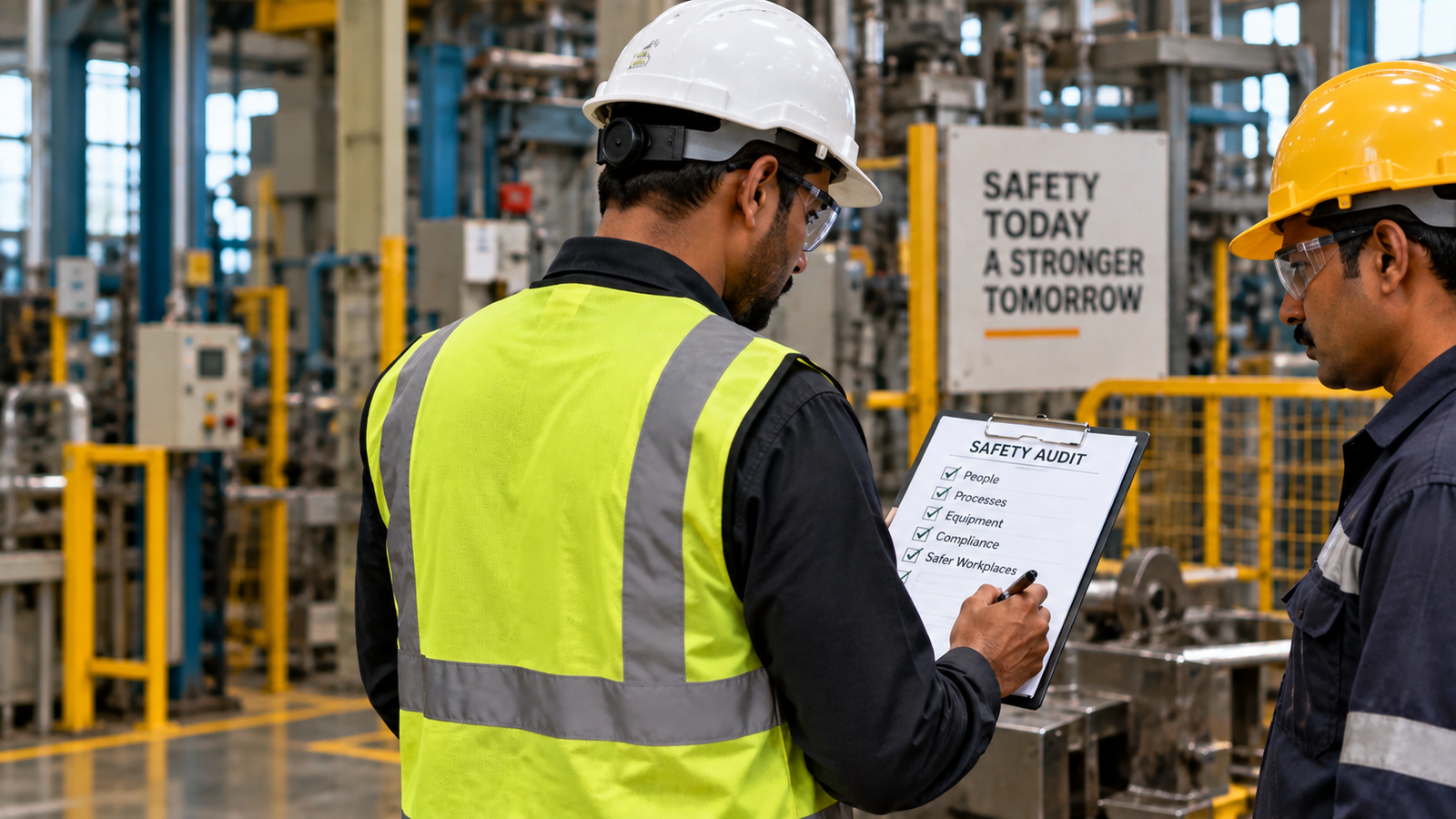
A safety audit is a structured assessment of workplace conditions, safety practices, processes and controls designed to identify hazards, evaluate risks and identify areas that may require improvement.
For industrial and operational workplaces, safety audits can help organizations understand whether existing safety practices are effectively addressing workplace risks. They can also support organizations in identifying safety gaps and strengthening workplace protection.
A safety audit may cover different areas depending on the nature of the workplace, equipment, processes and activities involved.
At ViDe Turnkey Solutions LLP, safety audit and compliance services are designed to help organizations identify workplace hazards, assess safety risks and strengthen safety practices across different operational environments.
Why Are Safety Audits Important?
Workplaces can involve a wide range of hazards.
These may be associated with:
- Machinery and equipment
- Electrical systems
- Chemicals and hazardous materials
- Work at height
- Confined spaces
- Material handling
- Forklifts and workplace vehicles
- Personal protective equipment
- Industrial processes
- Warehouse operations
- Workplace procedures
A safety audit provides a structured way to review these areas and identify potential gaps.
Regular assessments can help organizations:
- Identify workplace hazards
- Assess existing safety practices
- Understand potential safety gaps
- Review workplace controls
- Identify areas requiring corrective action
- Strengthen worker protection
- Support safer operational practices
A safety audit should therefore be viewed as part of an organization’s broader approach to workplace safety rather than simply a compliance exercise.
What Does a Safety Audit Cover?
The scope of a safety audit depends on the workplace and its specific risks.
A comprehensive assessment may examine several areas of workplace safety.
1. Workplace Safety Practices
A safety audit can review existing workplace practices and procedures to identify areas that may require improvement.
This may include reviewing how safety procedures are implemented during routine and non-routine activities.
The objective is to understand whether workplace controls are appropriate for the activities being carried out.
2. Hazard Identification and Risk Assessment
Identifying hazards is an important part of workplace safety.
A safety assessment can help identify hazards associated with:
- Equipment
- Processes
- Workplace activities
- Materials
- Work environments
- Human interaction with machinery or equipment
The identified hazards can then be assessed to understand associated risks and determine appropriate control measures.
For organizations requiring a more structured assessment, ViDe also provides HIRA & Risk Assessment services.
3. Industrial and Process Safety
Industrial facilities may involve complex processes and operational risks.
Specialized safety assessments can be used to review areas such as:
- Process safety
- Chemical safety
- Construction safety
- Laboratory safety
- Industrial operations
The scope of the assessment should be based on the nature of the facility and its specific operational risks.
ViDe provides Industrial & Process Safety Audits for organizations operating in complex industrial environments.
4. Work at Height and High-Risk Activities
Certain workplace activities involve additional safety considerations.
These may include:
- Work at height
- Confined space entry
- Permit-to-work activities
- Lockout/tagout procedures
- Personal protective equipment requirements
Specialized audits can help organizations review existing practices and identify areas where additional controls may be required.
ViDe’s Workplace & Specialized Safety Audits cover these types of higher-risk workplace activities.
5. Warehouse and Material Handling Safety
Warehouses and material handling environments involve their own set of safety risks.
A warehouse safety assessment may consider:
- Storage systems
- Rack safety
- Forklift operations
- Workplace vehicle movement
- Material handling activities
- Warehouse traffic
- Safety controls around storage areas
These assessments can help organizations identify risks and strengthen safety controls across warehouse operations.
ViDe provides Warehouse, Rack & Material Handling Safety assessment services for these environments.
6. Machine Safety
Machinery can introduce significant workplace risks if appropriate safeguards and safety practices are not maintained.
A machine safety assessment may review:
- Machine guarding
- Safety practices
- Operational conditions
- Potential exposure to hazards
- Existing machine safety controls
Organizations can use machine safety assessments to identify areas requiring improvement and support safer production environments.
ViDe provides Machine Safety & Management Systems services covering machine safety assessments and management system support.
What Is the Safety Audit Process?
Although the exact process can vary depending on the workplace and scope, a safety audit generally follows a structured approach.
Step 1: Understand the Workplace
The first step is to understand the organization’s operations, workplace environment, processes and activities.
This helps determine which areas should be included in the assessment.
Step 2: Identify Hazards
The workplace is assessed to identify potential hazards associated with equipment, processes, activities and operating conditions.
Step 3: Assess Risks
Once hazards have been identified, the associated risks can be evaluated.
This helps organizations understand which areas may require attention and where additional controls may be appropriate.
Step 4: Review Existing Controls
Existing safety measures, procedures and workplace controls can then be reviewed.
The objective is to determine whether existing measures adequately address the identified risks.
Step 5: Identify Safety Gaps
The assessment can identify areas where workplace practices, procedures or controls may require improvement.
These findings provide organizations with a clearer understanding of their safety priorities.
Step 6: Recommend Improvements
Practical recommendations can then be developed to help address identified gaps and strengthen workplace safety.
The recommendations should be relevant to the workplace’s actual conditions, activities and operational requirements.
What Are the Benefits of a Safety Audit?
A properly structured safety audit can provide organizations with a clearer understanding of their workplace safety conditions.
Some potential benefits include:
Better Hazard Identification – Helps organizations identify hazards that may not be immediately obvious during routine operations.
Improved Risk Awareness – Provides a structured assessment of workplace risks and areas requiring attention.
Stronger Safety Controls – Helps organizations review existing controls and identify opportunities for improvement.
Improved Workplace Protection – Supports better protection of workers, equipment and workplace operations.
Better Safety Planning – Audit findings can help organizations prioritize safety improvements based on identified risks.
Support for Compliance – Safety audits can help organizations review their existing safety practices against applicable requirements and workplace expectations.
How Often Should a Safety Audit Be Conducted?
There is no single frequency that applies to every workplace.
The appropriate audit frequency can depend on factors such as:
- Type of industry
- Workplace hazards
- Operational complexity
- Changes in processes
- Equipment and machinery
- Previous audit findings
- Incident history
- Applicable requirements
- Organizational safety practices
Organizations should therefore determine audit frequency according to their workplace conditions and safety requirements.
Additional assessments may also be appropriate when there are significant changes to equipment, processes, facilities or operations.
Safety Audit vs. Safety Inspection: What's the Difference?
| Safety Audit | Safety Inspection |
|---|---|
| Broader and more structured assessment | Often focused on specific workplace conditions |
| Reviews safety practices and controls | Looks for hazards or unsafe conditions |
| Can assess procedures and systems | Often focuses on physical conditions |
| Can identify compliance and process gaps | Can identify immediate workplace hazards |
| May result in broader improvement recommendations | Often supports immediate corrective action |
What Should Organizations Do After a Safety Audit?
Completing an audit is only one part of the safety improvement process.
Organizations should review the findings and determine which actions are required.
A practical approach can include:
- Review the audit findings.
- Identify priority safety gaps.
- Assign responsibility for corrective actions.
- Establish realistic timelines.
- Implement appropriate controls.
- Track corrective actions.
- Verify that actions have been completed.
- Conduct follow-up assessments where required.
This helps turn audit findings into practical workplace improvements.
Safety Audits at ViDe Turnkey Solutions
ViDe Turnkey Solutions LLP provides professional Safety Audit & Compliance Services designed to help organizations identify workplace hazards, assess risks and strengthen safety practices.
Our safety audit services cover a range of workplace requirements, including:
- Safety audits and compliance assessments
- HIRA and risk assessment
- Industrial and process safety audits
- Chemical safety audits
- Construction safety audits
- Laboratory safety audits
- Work at height audits
- Permit-to-work audits
- Confined space audits
- LOTO audits
- PPE audits
- Warehouse safety audits
- Rack safety audits
- Forklift and vehicle safety audits
- Machine safety audits
- ISO 45001 and ISO 14001 management system implementation and internal audits
The scope of an assessment can be selected according to the organization’s workplace, operational requirements and identified risks.
Final Thoughts.
A safety audit provides organizations with a structured way to understand workplace hazards, assess safety practices and identify areas that may require improvement.
The most useful audits are not simply about identifying problems. They should help organizations understand their risks and support practical measures to strengthen workplace protection.
For industrial, commercial, warehouse and operational environments, a structured safety audit can form an important part of a broader workplace safety strategy.
Need a Safety Audit for Your Workplace?
Identify safety gaps. Strengthen workplace protection.
ViDe Turnkey Solutions LLP provides professional safety audit and compliance services designed to help organizations identify hazards, assess risks and support safer workplace operations.