
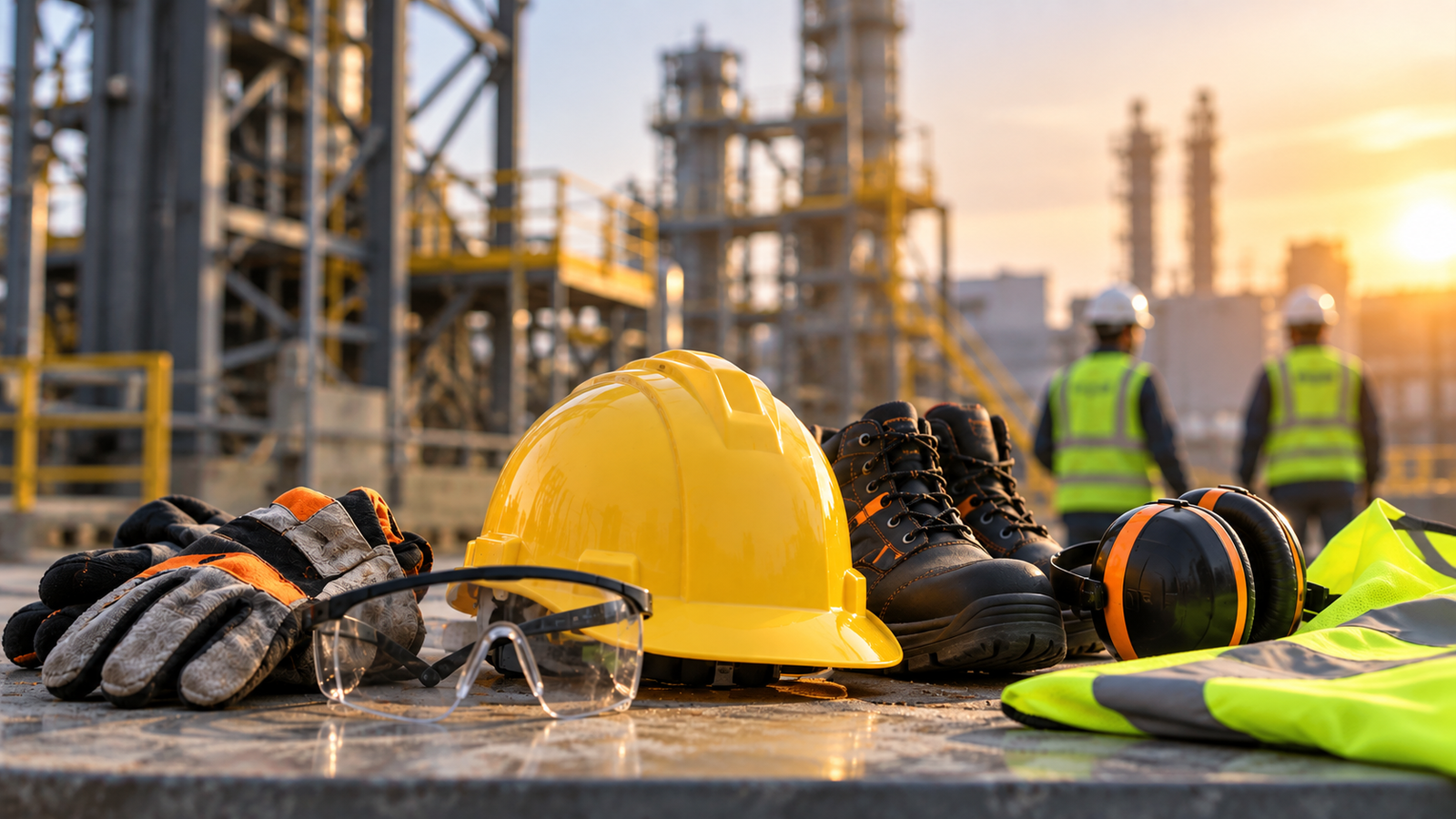
Personal Protective Equipment (PPE) is one of the most important lines of defence against workplace hazards. From safety helmets and protective eyewear to gloves, safety footwear and high-visibility clothing, the right PPE helps protect workers from injuries and occupational risks.
What Is Personal Protective Equipment (PPE)?
Personal Protective Equipment (PPE) includes clothing and equipment that protect workers from specific workplace hazards. PPE acts as a barrier between the worker and risks such as falling objects, sharp materials, chemicals, excessive noise, electrical hazards, dust and other occupational dangers.
Common Types of PPE
Head Protection
Safety helmets and hard hats help protect workers from falling objects, impact and other head injuries.
Eye and Face Protection
Safety glasses, goggles and face shields help protect against flying particles, chemical splashes, dust and other eye or face hazards.
Hand Protection
Safety gloves are selected according to the hazard and can provide protection from cuts, abrasions, chemicals, heat and other risks.
Foot Protection
Safety shoes and boots help protect feet from impact, compression, punctures, slips and other workplace hazards.
Hearing Protection
Earplugs and earmuffs help reduce exposure to excessive workplace noise and protect against hearing damage.
Protective Clothing
High-visibility clothing, coveralls, chemical-resistant clothing and other protective garments provide additional protection based on the work environment.
Why Is PPE Important in the Workplace?
PPE plays an important role in a workplace safety program because it provides an additional layer of protection when engineering controls, safe work practices or administrative measures cannot completely eliminate a hazard. The right PPE can help reduce the likelihood and severity of workplace injuries when workers select, fit, maintain and use it correctly.
PPE should not be the only safety measure. Employers should first identify and assess workplace hazards. They should then implement appropriate controls and determine what PPE workers need for the remaining risks.
How to Choose the Right Personal Protective Equipment
Choosing the right PPE starts with understanding the hazards present in the workplace. Different tasks and environments require different levels and types of protection, so always select PPE based on the specific risks involved.
Key factors to consider include:
1. Identify the hazard – Determine whether workers are exposed to risks such as impact, chemicals, heat, noise, electrical hazards, dust or sharp materials.
2. Select the appropriate protection – Choose PPE that is specifically designed to protect against the identified hazard.
3. Ensure proper fit – PPE should fit the worker correctly without restricting movement or causing discomfort.
4. Check quality and standards – Select reliable PPE that meets applicable safety standards and is suitable for the intended application.
5. Train workers – Workers should understand how to correctly wear, use, inspect and maintain their PPE.
6. Inspect and maintain PPE – PPE should be regularly checked for damage, wear or deterioration and replaced when necessary.
Common PPE Mistakes to Avoid
Even when PPE is available, incorrect selection or use can reduce its effectiveness. Some of the most common mistakes include:
Using the wrong type of PPE – PPE must match the specific hazard. Using general-purpose equipment when workers need specialized protection can leave them exposed.
Poor fit or incorrect wearing – PPE that is too loose, too tight or worn incorrectly may not provide the intended level of protection.
Failing to inspect PPE – Damaged, worn or expired PPE should not be used. Regular inspections help identify equipment that needs to be repaired or replaced.
Ignoring worker comfort – Uncomfortable PPE may discourage workers from wearing it consistently. Fit, usability and comfort should therefore be considered when selecting equipment.
Lack of training – Workers should know how to wear, adjust, inspect, clean and store their PPE correctly.
Treating PPE as the only safety control – PPE should complement other safety measures rather than replace hazard elimination, engineering controls and safe work practices.
PPE and Workplace Safety: A Practical Approach
Effective PPE management is about more than simply providing protective equipment. Organizations should take a systematic approach to workplace safety. This includes identifying hazards, selecting suitable PPE and ensuring that workers use it correctly.
A practical PPE programme should include regular workplace hazard assessments, appropriate PPE selection, worker training, proper storage and maintenance, and routine inspections. Supervisors should also ensure that PPE requirements are followed consistently, particularly in high-risk work areas.
When organisations combine PPE with effective safety procedures and other hazard controls, it becomes an important part of a safer and more controlled working environment.
When Should PPE Be Replaced?
PPE does not last forever. Regular inspection is important to ensure that protective equipment continues to provide the required level of protection. Replace PPE when it becomes damaged, worn, contaminated or no longer fits correctly.
Manufacturers may also recommend a service life or replacement schedule for some PPE. Employers should follow the manufacturer’s instructions. They should also establish routine inspection and replacement procedures.
Workers should immediately report damaged or defective PPE instead of continuing to use equipment that may no longer provide adequate protection.
Final Takeaway
Personal Protective Equipment is an essential part of workplace safety, but effective protection depends on choosing the right equipment and using it correctly. From head protection and safety footwear to gloves, eye protection and protective clothing, organisations should select each type of PPE according to the hazards workers may face.
A strong PPE programme combines appropriate equipment with hazard assessment, worker training, regular inspections and proper maintenance. When these elements work together, organisations can create safer workplaces and better protect their people.
Need the Right PPE for Your Workplace?
Choosing the right personal protective equipment is an important step towards creating a safer workplace. ViDe Turnkey Solutions provides a range of personal protective equipment solutions designed to help organisations address workplace hazards across industrial and operational environments.
From head protection and safety eyewear to gloves, safety footwear and protective clothing, our team can help you identify and select PPE suited to your workplace requirements.